

Bridging, Belonging & Hope: Amplifying the YMCA Movement with RSD
This impact story is abridged and adapted from an in-depth case study.
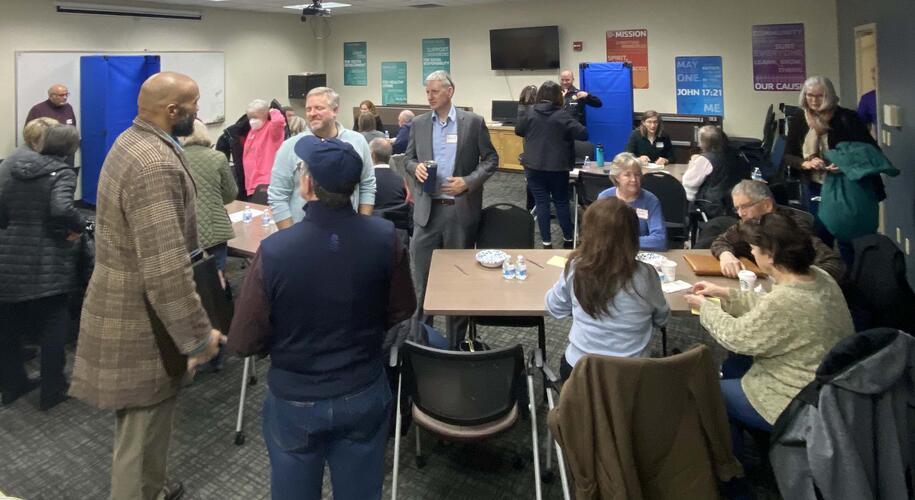
“We can decide not to be polarized. We can be carriers of hope in practice. It's not just a wish—you can do it.”
Janelle Nelson, Association Mission Director
YMCA of Pierce and Kitsap County (WA)
Shortly before the pandemic, an advisory council member at a YMCA center in Washington state noticed the divisiveness in his community and throughout the entire country. He urged the Y’s leaders to find a way to address this divide.
In 2020, Janele Nelson, association mission director for the YMCA of Pierce and Kitsap County (PKC Y), reached out to Essential Partners (EP) to see if it could help. EP’s Reflective Structured Dialogue © (RSD) is a highly flexible approach to communication and culture change, especially when navigating differences of perspectives and identities.
It was just what the PKC Y needed.
The next year, EP led a two-day, online training on RSD for 18 PKC Y staff members and community volunteers, including the advisory council member who had initially noticed the problem. The PKC Y has since led issue-oriented community dialogues and has hosted internal dialogues to navigate difficult questions while also shifting the culture of the institution.
It wasn’t long before the collaboration between EP and the “Y movement” extended to the YMCA of the USA (Y-USA). Thanks to a 2024 grant from the AAA-ICDR Foundation, EP was able to begin working with 19 additional YMCAs over the following two years.
In each case, a cohort of stakeholders was trained in RSD design and implementation. The local Ys have subsequently received support and coaching as they adapt RSD to their unique needs and context. Nearly all the local Ys have identified an urgent need for healthier communication norms within their institutions, particularly for healthier conversations about operational and/or strategic questions that intersect with the shared values of the local Y community.
“RSD complements the way that we obviously want to support community and how we want to be looked at when there are issues that are coming into the community,” says Jenelle Balstra, Learning and Training Manager for the Alliance of Massachusetts YMCAs and Northeast Learning Center, who participated in an EP training in 2026.
“RSD seemed an obvious, helpful tool both for how our own organization talks within about hard things and also as controversial things happen in the community,” says Tim Hallman, association chaplain of The YMCA of Greater Fort Wayne (Fort Wayne Y).
The Fort Wayne Y and Massachusetts Alliance Ys are just a few of many local Ys leveraging RSD to hold challenging discussions, to develop internal skills and capacities, and to weave a culture of belonging to amplify the mission of the larger Y movement.
The Y Movement
George Williams, a young factory worker, founded the first YMCA in London in 1844. “He saw a desperate lack of connection, infrastructure, and well-being,” Nelson says. Though they were packed into rooms above the factories where they worked, sharing beds with their coworkers, these lonely, isolated young men had no sense of community or direction. “The YMCA was a spiritual answer to a societal need,” explains Nelson.
The first American YMCA was established in Boston seven years later, and YMCAs would spring up throughout the United States over the decades that followed. Now celebrating its 175th year, the network of YMCAs touches an astonishing number of Americans. According to the Y-USA website, “The nation’s 2,600 Ys serve 17.4 million people in 10,000 communities and are spread across all 50 states, plus the District of Columbia and Puerto Rico.”
Because the YMCA is built on a federation model rather than a top-down hierarchy, local Ys have a great deal of autonomy—even mission statements may vary from one YMCA to the next. While the local Ys pay dues to Y-USA, the national organization serves primarily as a resource to local Ys rather than a governing body. In addition, many local Ys band together in statewide or regional “alliances.”
The result is a multilayered phenomenon known as the “Y movement.” “Even though many organizations, especially as old as the Y, are viewed more as institutions,” Nelson observes, “the Y has remained in many regards as a movement that is responsive and agile enough to rise up to needs on a local and community level.”
While it can vary by locality, the most commonly adopted mission statement sounds something like this: “The Y is a nonprofit organization whose mission is to put Christian principles into practice through programs that build healthy spirit, mind and body for all.”
Key phrases in the mission statement prompt discussion and exploration today. For example, what does it mean to include “Christian” in the YMCA’s contemporary identity? And what does providing programs “for all” actually entail?
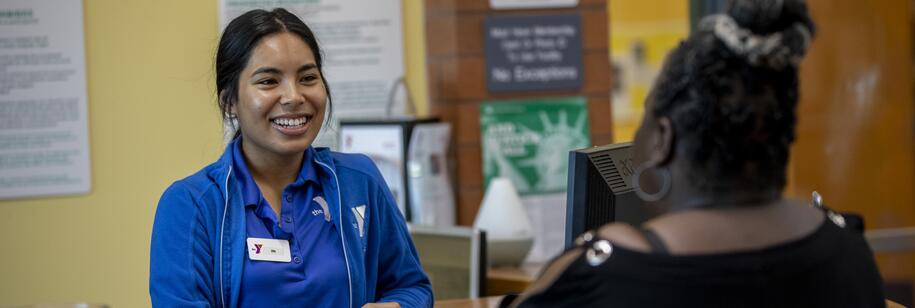
“Sometimes you’ve got to play the long game. Keep at it every day. Hope.”
The YMCA of Pierce and Kitsap Counties (Washington)
Founded in 1883, the YMCA of Pierce and Kitsap Counties spans two large counties in Washington state, including the city of Tacoma as well as a U.S. naval base. With a staff of about 2,400 and nine centers (with fitness facilities, pools, art rooms, and dance studios), the PKC Y serves 130,000 people annually. In addition, it partners with eight school districts to provide before-school and after-school care for elementary school students and operates three early learning centers for younger children.
After staff and volunteers participated in a two-day training with EP, the PKC Y began to host external dialogues, both for the community at large and for specific partners who approached Nelson for this type of programming. One early dialogue focused on community members’ perspectives on homelessness.
“We weren’t trying to say we were going to solve or come up with a big strategic plan for this community about homelessness,” Nelson recalls. “We wanted to have people talk about how they view homelessness.”
These community dialogues became known as “Bridge of Hope,” an initiative initially directed by Nelson and now led by Sean Lambird, PKC Y’s association mission coordinator. Bridge of Hope built on the PKC Y’s desire to function as “a third place”—a space open to any member of the community, without cost or membership, a place where residents could gather to talk with one another in deeply meaningful ways.
Through Bridge of Hope, the PKC Y has partnered with local institutions and communities to lead dialogues on several divisive or difficult topics. A local school district reflected on the high rates of bullying and suicide, and what could be done. A communication professor at a local community college has led her students in dialogues about politics, social media, and their anxieties and fears concerning AI and technology. And local faith congregations have held dialogues on issues ranging from women’s leadership to guns.
Increasingly, the PKC Y found that the change it wanted to see in the world would need to start internally. Certainly, RSD would be used for challenging or complex internal discernment about policy, belonging, and values. But more than that, PKC Y staff would need to embody this change themselves, including in their interactions with colleagues and the public.
RSD needed to be woven into the fabric of the PKC Y’s culture, so it was paramount that staff and volunteers become more fluent in RSD principles and practices. Nelson and others began to lead one-hour introductions to RSD at staff meetings as well as staff dialogues on everyday issues like the Y’s dress code as well as more philosophical questions like the role of Christianity in the YMCA (see our impact spotlight on the Y Identity Project).
“Y staff and volunteers don’t give away what they don’t have,” Nelson observes. “Even well-being and spirit, mind, body, if they don’t understand what that is for themselves, if they're not engaged in well-being in an integrative way, they don’t do it for members. They don’t put it into their programs.” Nelson emphasizes that the principles of RSD have to be “embedded” into the culture of staff and their experience: “You’ve got to show it in-house.”
In his work with Bridge of Hope, Lambird is continuing this balance of community dialogues and using RSD as a tool for staff development, including what he calls “care for staff.”
Staff dialogue is essential. “We want to make sure that we’re caring for our own YMCA here at home,” he says. “We’re equipping our staff with the skills to relate with one another so they can care for one another in this community they’re working in together, regardless of the differences between them.”
Reflecting on the PKC Y’s work with RSD, Lambird says, “Part of the Y’s mission is social responsibility: How are we responding to our community that has all these needs? It’s a long game sometimes. It’s one of the greatest lessons I’ve learned in this role: Sometimes you’ve got to play the long game. Keep at it every day. Hope.”
The YMCA of Greater Fort Wayne (Indiana)
Founded in 1858 as one of the original “railroad Ys” that provided safe, respectable housing and services for railroad workers, the YMCA of Greater Fort Wayne has unusually deep roots in its community. The greater metro area has 400,000 people—80,000 of whom belong to the Y and another 20,000 to 30,000 who are “program participants,” and 1,500 of whom are staff. It is truly a cornerstone of the local community.
In December 2024, EP trainers came to the Fort Wayne Y to work with 24 full-time staff who were hand-selected to participate. The expectation was that everyone who came to the training would put RSD into practice within the next six months. Hallman reflects on “how easy it was to get a yes and how easy it was to get 24 key leaders to accept the invitation and clear their schedule for two days.” Hallman points to the “learning culture” at the Fort Wayne Y: “There was a hunger for an in-depth training on listening and how to listen among complex scenarios.”
The Fort Wayne Y has focused its RSDs on community issues such as teen isolation, senior participation in community spaces, and homelessness—all conducted through the lens of the Y’s local context.
For example, the Fort Wayne Y community was shocked when one of the teens who had been a Y staff member died by suicide. Hallman reflects: “It got us thinking about ‘how do we talk about something really hard like that? How are teens doing? What ways are they feeling alone and isolated, cut off with maybe nobody to talk to?’” Hallman and another EP-trained staff member led a dialogue on this very sensitive topic.
From that initial dialogue, the Fort Wayne Y created a teen leadership summit, where teens learned how to be “bridgebuilders” and to reach out to other teens who seem, in Hallman’s words, “cut off, alone, not sitting with anyone.” Hallman continues to lead these bridgebuilding RSDs. He helps participants address isolation and loneliness, whether they see this isolation when they serve other teens in summer camps or when they return to school in the fall.
In another series of RSDs, the Fort Wayne Y sought to understand the motivation behind certain senior citizens who used the Y. They also deployed RSD to navigate internal policy around the use of shared public spaces by people experiencing homelessness (see our impact spotlight). These RSDs, says Hallman, “created a very safe space for people to share things that otherwise they may have glossed over or not shared in such rich detail. It was less about solving a crisis and more about making a safe space for people to share vulnerable stories of what the Y has done in their life.”
Hallman also sees an opportunity to develop the capacity for healthy discourse by deploying RSD with the Y’s advisory board, comprising local leaders from different sectors. “How we process it there at that advisory board meeting gives them skills they’re not going to get anywhere else. People have a really unique experience when they volunteer as an advisory board member, and they’re the ones going back to their banks and businesses and churches and hospitals and law firms and government offices addressing things there.”
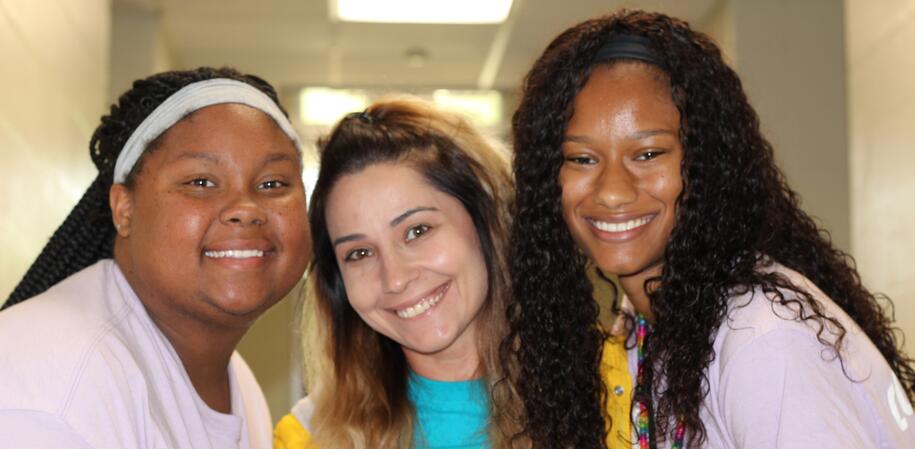
“RSD created a very safe space for people to share things that otherwise they may have glossed over or not shared in such rich detail. It was less about solving a crisis and more about making a safe space for people to share vulnerable stories of what the Y has done in their life.”
Tim Hallman, Association Chaplain
The YMCA of Greater Fort Wayne (IN)
The YMCA of the USA
George Zavala is the manager of Bridging, Belonging, and Community Engagement at YMCA of the USA (Y-USA). This body of work, led by Y-USA's Global Relations and Community Engagement (GRACE) team, helps YMCAs across its global movement develop the skills and practices needed to strengthen relationships and deepen trust.
GRACE helps Y staff develop the relationship-building skills that are needed to allow people to thrive. Y-USA pilots and tests tools and resources to create leading practices local Ys can use as they foster community engagement, build staff relationships, and cultivate connections between the Y and volunteers. Y-USA’s job is to take what an organization like EP offers and then make it relevant to and resonant with the work of local Ys.
When Zavala joined Y-USA in late 2023, the Team Up Project, a national collaboration between Catholic Charities USA, Habitat for Humanity International, Interfaith America, and the YMCA, was already getting underway. The initiative advances service-based bridge-building by bringing people together across differences to build relationships, strengthen communities, and work toward the common good.
Through the Team Up Project, Zavala met Nelson, who had been working with EP and RSD in the PKC Y’s Bridge of Hope program (see above) for several years. Bridge of Hope sparked the interest of Y-USA and the Team Up Project, and ultimately led to Nelson introducing Y-USA to EP in early 2024.
In 2026, after a period of informal thought partnership and support, EP led an RSD training that led to the launch of a formal initiative through the Y-USA’s Bridgebuilding Innovation Team. EP now leads content and expertise for a smaller cohort of Ys, including the Birmingham Y.
In total, twenty unique YMCAs in the U.S. have participated in two cohorts since 2023.
Particularly appealing to Y-USA is the fact that RSD is a very tangible set of practices. In its most robust form, it also provides a clear structure and process for difficult conversations. RSD reinforces many of the community engagement, inclusion, and belonging practices the Y has promoted for years, and Zavala sees the promise of more uptake in local Ys around these practices.
“We want to equip staff with the skills, techniques, and approaches that are proven to be successful in navigating difficult conversations,” he says, “so that community members, in turn, feel this is a space where they can practice these skills or have these tougher conversations potentially.”
YMCA’s Use of RSD: Insights, Successes, Challenges
The Ys that are working with or have been recently trained in RSD report overwhelmingly their strong conviction that, with RSD, people can learn to talk to each other, even if there are strong differences between them.
RSD amplifies what YMCAs are doing already in their focus on community engagement, belonging, and inclusion. Because RSD is not a rigid, one-size-fits-all model of dialogue and because it doesn’t rely on topic-based program design, it works well with the Y movement’s complex structure. Thus, RSD’s flexibility allows for widespread adoption and tailored application. Many YMCAs can be trained in the approach at once but deploy and adapt RSD for their own unique circumstances.
Key outcomes from the Y movement’s work with RSD include: mediating power dynamics; creating a sense of equity; planting seeds of hope; encouraging active and present listening; and nurturing genuine curiosity that dispels stereotypes. From the nuts-and-bolts techniques (such as giving each participant equal time to speak) to the spirit of connection the dialogues foster, these dialogues prompt authentic connections, deeper belonging, and the opportunity to share values, visions, and reflections.
The challenges that face YMCAs as they adopt RSD stem in large part from the Y movement itself—its sheer size and fragmented nature, its variable bureaucratic structures from local Y to local Y, and its organizational transitions and frequent staff turnover (due to a necessary reliance on part-time staff members, many of whom are very young). Moreover, as Hallman points out, YMCAs tend to be risk-averse and to shy away from controversial topics.
Despite these challenges, RSD is taking hold in Ys across the country. Success is seen not just in external programs, like the PKC Y’s Bridge of Hope, but perhaps even more so in the “listening culture” that is emerging inside local Ys. Across diverse regions and populations, the Ys trained by EP all see the need to make RSD part of their internal institutional cultures. This would allow them to influence their community authentically, reinforcing healthy communication and inclusion norms through every interaction across many different programs and centers.
The Future of RSD and the YMCA
EP is now working to secure funding to enable broader adoption of RSD across the Y movement. EP will continue to provide support for stakeholders using RSD in their local contexts, both within YMCAs and in the community.
To the Ys that have begun working with RSD, the possibilities seem limitless—from integrating daily skills for healthy internal communication to hosting community-facing dialogues on tough subjects.
“Part of our North Star, as we think about how we create more connected communities at the Y,” says Zavala, “is definitely the goal of reducing isolation, increasing connection, and helping people really see that the YMCA can be a place where they can come together.” He sees RSD as a crucial tool for achieving these goals.
Nelson perhaps says it best: “Our vision is to bring awareness to people that they are bridge builders, to awaken that desire to connect on a deeper level. I want to give people experiences of [RSD] working well so that they are more hopeful for themselves personally but also for society and the community. We can decide not to be polarized. We can be carriers of hope in practice. It's not just a wish—you can do it.”
This impact story is abridged and adapted from an in-depth case study.
Related Impact Stories



















Testimonials

Program ParticipantI am now open to new views and can moderate my impulse to debate or persuade others of different views
Montana
-
Janele Nelson, Mission DirectorIn these divisive times, Essential Partners has given my local YMCA and now the national YMCA a means to build bridges through dialogue, re-establishing foundations for constructive change to occur.
YMCA of Pierce & Kitsap Counties (WA)
-
Program ParticipantI did not anticipate having as many concrete takeaways as I do. I feel there is an immense practical application.
-
Megan DeFranzaHere safe space was created for pastors and church leaders to wrestle with topics like evolution which are all too often “off limits” or believed to be antagonistic to the faith.
Gordon College, Massachusetts
-
Etionette Nshirmirimana, Burundian Master TrainerI realized that by using the “dialogue” approach, people could talk of what is deep in their heart, especially things that have harmed them.
Burundi
-
Paul Schupe, Hancock United Church of ChristIt’s amazing how closely we can work together on certain projects and never know what about our faith motivates our work. This work deepened my appreciation for everyone who was there; hearing everyone's stories helped me to appreciate them more and the depth of their convictions, even when they’re convictions I don’t share.
Lexington, Massachusetts
-
Program ParticipantThis is a different tool for engagement. It’s not about you, it’s about others. It involves the art of listening and sincerely talking from the heart
Interfaith Mediation Centre, Nigeria
-
Kim Davidson, OmbudsI’ve gained not only confidence but tools. The Essential Partners training was worth every penny.
Oberlin College, Ohio
-
Program ParticipantI felt an amazing sense of accomplishment when the Essential Partners training ended; that I'd done something important for my community and something important for me.
Massachusetts
-
Kim Davidson, OmbudsI’ve gained not only confidence but tools. The Essential Partners training was worth every penny.
Oberlin College, Ohio
-
Janele Nelson, Mission DirectorIn these divisive times, Essential Partners has given my local YMCA and now the national YMCA a means to build bridges through dialogue, re-establishing foundations for constructive change to occur.
YMCA of Pierce & Kitsap Counties (WA)
-
Program ParticipantThis is the best adult learning experience I have had in the past five years. I wanted to learn new skills—I did!
-
Lauren Cobb, Task Force MemberI now lead teams with a different language, using different processes, and with a different awareness of team dynamics. [I’ve seen] relationships grow and deepen, unity and commitment remain high, and mutual respect established and fostered.
Glendale Presbyterian Church, California
-
Misty Stoll, School Board TrusteeI ran for my local school board in 2018 and was elected. I use the skills in our meetings, whether I’m chairing the meeting or not. This makes the meetings much more productive. We don’t go over the same topics over and over again.
Wyoming
-
Nicki Glasser, Policy CoordinatorWhat surprised me was how much you could transform a relationship during a three-hour conversation.
Transformation Center, Massachusetts
Louise O’Kane, Community Places[Essential Partners’] technique is used to explore contentious or divisive issues. So looking at renewable energy we thought this was an ideal opportunity to explore all the complexities of that issue. I found it a really useful method, and although this is the first time we’ve used it I am sure we’ll be using it again.
Northern Ireland, UK
-
Noga Shemer, Associate Professor in Anthropology“When I started bringing the RSD model into the classroom, it changed everything, and I had this overwhelming sense of what the classroom could be. The student feedback was unlike anything I had seen before. Students said, ‘Wow, why haven’t we had the chance to do this before? And why don’t we get to do this more often in our education?’”
University of Connecticut
-
Program ParticipantThis is a new idea, so many people speaking from their hearts. People can come together...if people can understand, they can change their hearts; then this can bring about more change.
Interfaith Mediation Centre, Nigeria
-
Program ParticipantI felt an amazing sense of accomplishment when the Essential Partners training ended; that I'd done something important for my community and something important for me.
Massachusetts
-
Program ParticipantThere should be opportunities throughout the [Anglican] Communion for ongoing structured conversations regarding difficult issues. These should engage persons at all levels within and between Provinces and should be guided by agreed covenants similar to those that have assisted our conversations.
Anglican Community & Human Sexuality Retreat
-
Program ParticipantI am now open to new views and can moderate my impulse to debate or persuade others of different views
Montana
-
Windor DorkoAs a former rebel, I really believe that if we had known about dialogue, perhaps we would not have had a civil war.
Liberia
-
Patrick Hale, director of Multicultural and Identity ProgramsOne of the things that’s so crucial to even fostering dialogue around diversity, equity, and inclusion is creating opportunities for folks to engage in deep reflective self-awareness.
Babson College, MA
-
Rebekah Shrestha, SVPEssential Partners has played a catalytic role in our ability to facilitate dialogue time and time again, and we could not have done this work without them.
Belfer Center for Innovation & Social Impact and Office of Strategic Planning, 92NY
-
Meirav Solomon ’20Dialogue not only teaches you how to interact and understand more deeply those around you, it also teaches you more about the world around you and yourself. I think dialogue is super important to my growth as a student, a global citizen and a human being. I have learned to listen, I have learned to speak out, I have learned how to access my stretch zone (where I feel uncomfortable speaking but not turned off) and I have learned where my limits are.
Cary Academy, NC
-
Romeo McCauley, Project PartnerI learned that I can build relationships, that I can be connected to anybody who I want to be connected to, no matter how difficult it is
Liberia
-
Program ParticipantThe highlight for me was the interconnectedness of the participants’ views, mutual respect, and range of experiences within the group
Montana
-
Bill Scott, Project DirectorThere was a remarkable change in the way we were able to communicate with one another following the facilitated conversations.
Massachusetts Department of Mental Health
-
Program ParticipantI read this comment from the 14th Dalai Lama: "Every change of mind is first of all a change of heart.” It seems appropriate for what we are doing.
Bayview, Michigan
-
Linda Gryczan, MediatorInstead of demonizing and dehumanizing the other, we built a deeper connection. The fact that we disagree matters much less. It matters much more that we are neighbors in this community.
Montana Mediation Association
-
Matthew Sandikie, Project PartnerThis has been quite different from other discussions in Liberia about peace. While many processes have been about how to reform ex-combatants, this was about how we may hold our own views but live together peacefully.
Liberia
-
Janele Nelson, Mission DirectorIn these divisive times, Essential Partners has given my local YMCA and now the national YMCA a means to build bridges through dialogue, re-establishing foundations for constructive change to occur.
YMCA of Pierce & Kitsap Counties (WA)
-
Douglas Stone, Sheila Heen, and Bruce PattonWe owe a debt of gratitude to Laura Chasin and her collaborators at Essential Partners… From them, we have learned about the transformative power of telling one’s story and speaking to the heart of the matter.
Difficult Conversations
-
Undergraduate StudentI notice that my classmates take much more care when speaking about people who practice other religions. They make fewer assumptions, and they’re more careful with their words to make sure to avoid unintentional connotations.
Bridgewater College, Virginia
-
Kate CellThe thing that always feels like magic to me—and I’ve used it in several meetings that I’ve had since—is how the practitioners start by setting out pacts or agreements.
Union of Concerned Scientists, Massachusetts
-
Kim Davidson, OmbudsI’ve gained not only confidence but tools. The Essential Partners training was worth every penny.
Oberlin College, Ohio
-
Anjali Bal, Associate Professor of MarketingOne of the things that we talked about was the ability to hear another person’s point of view, even if our minds aren’t changed. We have to remember that any sort of movement is movement. If we don’t acknowledge small movement, then we just stay on two different sides, and it’s all black and white, and we don’t hear each other.
Babson College, MA
-
Program ParticipantWhile our differences remain, the relationships between us have been strengthened and deepened. We have gained in mutual respect, affection, and appreciation of one another as followers of Jesus and fellow-bishops.
Anglican Community & Human Sexuality Retreat
-
Megan DeFranzaThere is a need not only for safe space within our churches but for our church leaders who often feel alone, or who may feel their job could be at risk if they engage in controversial conversations. How are they to make safe spaces in their own congregations for healthy dialogue if they rarely experience safe space to do the same?
Gordon College, Massachusetts
-
Bob Bordone, Expert and AuthorEssential Partners does the best work in the field of dialogue and communication.
Harvard Negotiation & Mediation Clinical Program, Co-Founder
-
Anjali Bal, Associate Professor of MarketingWe talked about where we are in the world right now, so we talked quite a bit about polarization. Essential Partners showed how these conversations are becoming more taxing and challenging because of that polarization. These were some first steps in terms of how we can start to have those conversations.
Babson College, MA
-
Program ParticipantThis is a new idea, so many people speaking from their hearts. People can come together...if people can understand, they can change their hearts; then this can bring about more change.
Interfaith Mediation Centre, Nigeria
-
Douglas Stone, Sheila Heen, and Bruce PattonWe owe a debt of gratitude to Laura Chasin and her collaborators at Essential Partners… From them, we have learned about the transformative power of telling one’s story and speaking to the heart of the matter.
Difficult Conversations
-
Bob Bordone, Expert and AuthorEssential Partners does the best work in the field of dialogue and communication.
Harvard Negotiation & Mediation Clinical Program, Co-Founder
-
Dr. Brooke Vuckovic, Clinical Professor of Leadership“The Dialogic Classroom is by far and away the most skillful and thoughtful professional development I have had in years as an educator.”
Kellogg School of Management
-
Janele Nelson, Mission DirectorIn these divisive times, Essential Partners has given my local YMCA and now the national YMCA a means to build bridges through dialogue, re-establishing foundations for constructive change to occur.
YMCA of Pierce & Kitsap Counties (WA)
-
Program ParticipantThis is the best adult learning experience I have had in the past five years. I wanted to learn new skills—I did!
-
Imam Sani IsahThrough this training, we will have more people in the stream of work that we do and become better equipped with the know-how, skills and techniques. But most important, together we will sow a seed that will germinate and become a source of the antidote to terrorism, fanaticism, bigotry and extremism.
Nigeria
-
Gail AndersonWe became confident really early on that the model was working. We were nervous there would be yelling and blow-ups but after a few conversations we realized that wasn’t happening… People were treating each other humanely.
Minnesota Council of Churches
-
Bob Bordone, Expert and AuthorEssential Partners does the best work in the field of dialogue and communication.
Harvard Negotiation & Mediation Clinical Program, Co-Founder
-
Andrew Wulf, PrincipalThe community dialogue was instrumental in helping us create a new policy around class rank. Though a controversial topic in the community, the dialogue EP helped us run ensured all voices were heard and valued. Regardless of how people felt with the final result, one parent summed it up best for us, ‘sometimes the process is more important than the outcome’.
Newburyport High School
-
Nicki Glasser, Policy CoordinatorWhat surprised me was how much you could transform a relationship during a three-hour conversation.
Transformation Center, Massachusetts
-
Program ParticipantThis is the best adult learning experience I have had in the past five years. I wanted to learn new skills—I did!
-
Seth Karamage, MediatorI am amazed at what came out—the way people shared their stories. This is not like a role-play; it really touched me.
Interfaith Mediation Centre, Nigeria
-
Luke Zubrod, Director of Strategic InitiativesWhen there's an element of conflict, oftentimes we gravitate toward debate as a way of contending toward some decision or outcome. Dialogue is a much different proposition. The emphasis of dialogue is in understanding the other person's perspective, making sure they have the opportunity to feel heard.
Chatham Financial, Pennsylvania
-
Peter Cooke, Immigration Dialogue ParticipantThere’s a real difference to people who are coming to meetings. They say, wow this is so different. They all said how people were more on the ball, more congenial. Now people see growing the economy as a way to unify the receiving community and immigrant communities.
New Hampshire
-
Program ParticipantI read this comment from the 14th Dalai Lama: "Every change of mind is first of all a change of heart.” It seems appropriate for what we are doing.
Bayview, Michigan
-
Misty Stoll, School Board TrusteeThe Sheridan Community has changed in the best way since the Essential Partners training. The Center for a Vital Community has been holding monthly dialogues. I’m going to facilitate the upcoming one. What’s great is that we’re attracting a much more diverse group of participants. There are always the regulars who come, but now we’re also getting conservative Republicans to come as well—politicians come, even the Sheriff comes.
Wyoming
-
Romeo McCauley, Project PartnerI learned that I can build relationships, that I can be connected to anybody who I want to be connected to, no matter how difficult it is
Liberia
-
Janet Harris, Winthrop Rockefeller InstituteThe learning we received from Essential Partners has helped us open up space for people to have difficult conversations in a different way. The more we do this, the more we realize that dialogue has to be a part of all our work.
Arkansas
-
Program ParticipantBefore, I thought all dialogue that does not culminate in solution was considered equivalent to failure. Now I see that dialogue is a stage complete in itself.
Burundi
-
Seth Karamage, MediatorI am amazed at what came out—the way people shared their stories. This is not like a role-play; it really touched me.
Interfaith Mediation Centre, Nigeria
-
Program ParticipantI am now open to new views and can moderate my impulse to debate or persuade others of different views
Montana
-
Program ParticipantI did not anticipate having as many concrete takeaways as I do. I feel there is an immense practical application.
-
Program ParticipantBefore, I thought all dialogue that does not culminate in solution was considered equivalent to failure. Now I see that dialogue is a stage complete in itself.
Burundi
-
Sepi Djavaheri, Community Mobilizers Director“The Essential Partners training has had a multiplier effect—not only did it enrich the Dialogue Across Faiths event itself, but it also equipped a cadre of local leaders with effective tools to lead ongoing, constructive conversations within and between their congregations.”
UJA-Federation of New York
-
Cricket Fuller, The Christian Science MonitorThis wasn’t a policy debate [about guns]. Instead, two people whose backgrounds and views diverged in almost every way possible shared a moment of honesty that struck at the heart of the matter.
Boston, Massachusetts
-
Member of the CongregationI cannot possibly walk out of this experience and help being a different person. I feel that my own experience has been life-changing.
Glendale Presbyterian, California
-
Linda Gryczan, MediatorInstead of demonizing and dehumanizing the other, we built a deeper connection. The fact that we disagree matters much less. It matters much more that we are neighbors in this community.
Montana Mediation Association
-
Beth MendozaDialogue gets more results. It makes decision-making easier. It makes creating participation easier … our greatest organizational impact has been more contributions as well as more effective and efficient meetings.
Moraine Park Technical College, Wisconsin
-
Bill Scott, Project DirectorThere was a remarkable change in the way we were able to communicate with one another following the facilitated conversations.
Massachusetts Department of Mental Health
-
Rebekah Shrestha, SVPEssential Partners has played a catalytic role in our ability to facilitate dialogue time and time again, and we could not have done this work without them.
Belfer Center for Innovation & Social Impact and Office of Strategic Planning, 92NY
-
Synagogue Congregant“After Octover 7th, I used the Essential Partners Guide to Dialogues About Israel and Palestine to design the dialogue and develop prompts. I deployed the training I received from Essential Partners to lead a Reflective Structured Dialogue where participants could share stories, encourage curiosity, and approach one another with tenderness. … The dialogue programs at our synagogue were a resounding success. Members still hold very different perspectives, but those who disagree, even vehemently, have been able to maintain relationships. Those whose views fall between the extremes feel more able to share their perspectives. They see one another as members of a shared community once again.”
-
Jonathan Noyalas, Director of the McCormick Civil War Institute“RSD has been the most transformative thing in my 21 years of teaching. … Students have a greater desire to open up in class about things because they know that a Noyalas class is a safe environment. ‘I can say things here. I’m not going to be judged. I understand I’m contributing to a broader conversation.’”
Shenandoah University
-
Program ParticipantI felt an amazing sense of accomplishment when the Essential Partners training ended; that I'd done something important for my community and something important for me.
Massachusetts
-
Nicki Glasser, Policy CoordinatorWhat surprised me was how much you could transform a relationship during a three-hour conversation.
Transformation Center, Massachusetts
-
Anjali Bal, Associate Professor of MarketingOne of the things that we talked about was the ability to hear another person’s point of view, even if our minds aren’t changed. We have to remember that any sort of movement is movement. If we don’t acknowledge small movement, then we just stay on two different sides, and it’s all black and white, and we don’t hear each other.
Babson College, MA
-
Misty Stoll, School Board TrusteeI ran for my local school board in 2018 and was elected. I use the skills in our meetings, whether I’m chairing the meeting or not. This makes the meetings much more productive. We don’t go over the same topics over and over again.
Wyoming
-
Belle AbayaWhat is special about Essential Partners' approach is that it promotes authenticity, reduces defensiveness, increases curiosity, and boosts connectedness.
The Conflict Resolution Group Foundation, Philippines
-
Undergraduate StudentI notice that my classmates take much more care when speaking about people who practice other religions. They make fewer assumptions, and they’re more careful with their words to make sure to avoid unintentional connotations.
Bridgewater College, Virginia
-
Imam Sani IsahThrough this training, we will have more people in the stream of work that we do and become better equipped with the know-how, skills and techniques. But most important, together we will sow a seed that will germinate and become a source of the antidote to terrorism, fanaticism, bigotry and extremism.
Nigeria
-
Program ParticipantI did not anticipate having as many concrete takeaways as I do. I feel there is an immense practical application.
-
Janet Bixby, Director of Community Dialogues“Essential Partners has the magic sauce—its trainings. Working with Essential Partners and Community Dialogues has enabled us to say, ‘Hey, we have tools to help us be able to do this, and we have ways to do this. We can address these things.’ That's been incredibly useful and powerful.”
Lewis & Clark
-
Veronique Cavaillier, Director of Eastern Trade CouncilI think Essential Partners' training should be mandatory in every legislature. I think it should be a requirement.
The Council of State Governments
-
Belle AbayaWhat is special about Essential Partners' approach is that it promotes authenticity, reduces defensiveness, increases curiosity, and boosts connectedness.
The Conflict Resolution Group Foundation, Philippines
-
Belle AbayaAuthentic conversations will lead people to reflect on their own thinking and transform their perspectives to include that of others.
The Conflict Resolution Group Foundation, Philippines
-
Program ParticipantThis is the best adult learning experience I have had in the past five years. I wanted to learn new skills—I did!
-
Belle AbayaTogether, we married our ideas to create a dialogue model that took into consideration our young people’s particular needs, and our culture.
The Conflict Resolution Group Foundation, Philippines
-
Program ParticipantThe highlight for me was the interconnectedness of the participants’ views, mutual respect, and range of experiences within the group
Montana
-
Lauren Cobb, Task Force MemberI now lead teams with a different language, using different processes, and with a different awareness of team dynamics. [I’ve seen] relationships grow and deepen, unity and commitment remain high, and mutual respect established and fostered.
Glendale Presbyterian Church, California
-
Program ParticipantThis is a different tool for engagement. It’s not about you, it’s about others. It involves the art of listening and sincerely talking from the heart
Interfaith Mediation Centre, Nigeria
-
Cricket Fuller, The Christian Science MonitorThis wasn’t a policy debate [about guns]. Instead, two people whose backgrounds and views diverged in almost every way possible shared a moment of honesty that struck at the heart of the matter.
Boston, Massachusetts
-
Rebekah Shrestha, SVPEssential Partners has played a catalytic role in our ability to facilitate dialogue time and time again, and we could not have done this work without them.
Belfer Center for Innovation & Social Impact and Office of Strategic Planning, 92NY
-
Undergraduate StudentI have never heard people talk so openly about race, especially in a class setting. Everyone was respectful and honest at the same time. The dialogue structure helped me learn about my peers and helped me feel more comfortable than I ever have about discussing controversial issues.
Gordon College, Massachusetts
-
Program ParticipantThe highlight for me was the interconnectedness of the participants’ views, mutual respect, and range of experiences within the group
Montana