

Remembering Laura R Chasin, Ten Years Later
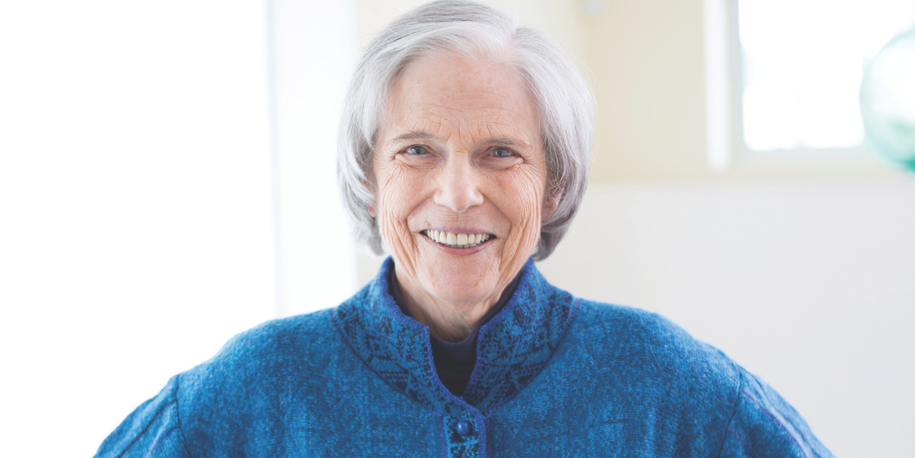
Today marks ten years since the passing of our beloved, visionary co-founder, Laura R. Chasin.
A graduate of Bryn Mawr College, Laura earned advanced degrees in Government from Harvard University and in Social Work from Simmons College before embarking on a career as a practicing therapist.
Laura was among the first to recognize the threat of contemporary polarization to our democracy. In 1989, with her expertise in behavioral health, deep knowledge of political dynamics, and genius for design, she launched a research and innovation initiative with colleagues from the Family Institute of Cambridge. It was called the Public Conversations Project, now known as Essential Partners.
Our co-founders developed a new intervention to stop cycles of polarization, called Reflective Structured Dialogue. Their research, insights, and leadership would prove foundational, the lodestone for a diverse field focused on stopping the spread of polarization.
To understand the legacy of Laura’s vision and work in particular, I invited several leaders from the field of dialogue, deliberation, and conflict resolution to offer brief reflections on Laura and her outsized influence.
Our hearts today are with Laura’s husband, EP co-founder Dick Chasin, as well as the rest of her family and all those who loved and knew her.
John Sarrouf, Essential Partners co-Executive Director
There is a golden thread of Laura's lifework that is woven into the fabric of every community we have ever worked with—and in thousands of others who learned from her wisdom and may never know it.
It’s there when people are able to stay connected through difficulty, when they’re deep in conflict about some decision or problem. It’s there when people turn toward one another in moments when division and fear would be so easy. It’s there when people use the dialogue model she co-developed to change the fabric of their culture, whether in its fullest form of small groups facilitated by someone trained in our approach, or taken apart and left like breadcrumbs to help people find their way back to each other.
Organizations like Braver Angels, Builders, Living Room Conversations, and Share Our America all use adaptations of the model that she created. It’s not an exaggeration to say that millions of people around the globe have been influenced by her visionary work.
Katie Hyten, Essential Partners co-Executive Director
Laura was a remarkable person. There are so many ways I could raise up her impressive legacy, but I want to focus on the genius behind our approach to the work. I feel Laura's presence most clearly in the depth of our collaborations and in how we invite our partners back into community with one another.
Essential Partners carries on a tradition set by Public Conversations Project: we dive into the thorniest, most complex and entrenched problems communities face—often confidentially. It’s the quiet, hard work of healing.
Every time people come closer to each other through this work, through dialogue and culture change, I see Laura's impact.
Doug Stone, Lecturer on Law, Harvard Law School; Founder of Triad Consulting Group; and co-author of Difficult Conversations
When I first learned of Laura and the Public Conversations Project, I was immediately captivated by their work. Particularly powerful for me was the idea that people with different views, even people in conflict, could come together and talk, not with the purpose of persuasion or winning, but with the sole purpose of mutual understanding. Understanding another person is harder work than most of us imagine, and the questions PCP recommended were particularly powerful in this regard—questions like, “What's at the heart of this for you?” “What are you still ambivalent about?” and “What's a personal experience you've had that has informed how you see this issue?” This general way of thinking about conflict, relationships, and communication had a big impact on our thinking when we were writing Difficult Conversations.
When I think of Laura herself, I think first of her charisma. Laura's humility, intelligence, generosity, and ability to make others feel seen and valued were, in my view, a key ingredient in the building of not just an organization but a kind of movement. People follow ideas, but they also follow people, and Laura attracted people both with the power of her ideas and the strength of her humble brand of leadership. The last conversation I had with Laura took place when she was driving the two of us home from a retreat. She said, "I'm feeling so hungry for learning. I feel almost greedy, like I just want to take everything in. And there's so much work to do." I am just as inspired by those words today as when I first heard them, and I remain deeply grateful for that conversation, and for Laura's friendship.
Bob Stains, Essential Partners Senior Associate
I gained so much from Laura, as a person, as a friend, and as a mentor. Laura was a model for doing this work with skill, compassion, and the absence of ego. She was a living example of grace under fire, seeing “resistance” as opportunity.
Many years ago, Laura and I were in a damp, dark monastery in the English countryside, facilitating a five-day retreat of Anglican bishops and archbishops from many countries. Laura had been sick at the start, so she needed to miss the beginning. I was terrified. Laura was reassuring. The design was complicated. The stakes were high.
Midway through, after Laura had joined us, we hit a major roadblock. We were proud of the design, which we’d spent almost a year preparing. The group had a different idea: it wasn’t working for them. They asked us to take a break and create a different design. I freaked out inside, awash with shame—and, it must be said, anger—but Laura took it in stride, never losing composure. She asked a small group of participants to work with us in a fishbowl format to redesign the rest of the retreat. As people came and went from lunch, they sat in with our little group as Laura led us in banging out a new plan to meet their evolving needs. And it worked.
That was Laura: putting the needs of the group first, unflappable in the face of change, and utterly unwilling to paint anyone as “bad” for having divergent ideas. The consummate partner, Laura knew the voice in my head that always whispered (or shouted!) “You’re just a guy from Buffalo; you don’t belong here!” especially in moments of challenge. She refused to listen to that voice. She helped me see and use my own gifts, especially when needed on a project. As we used to say, she “saw my star.” I was forever changed by her vision and her example.
Carolyn Lukensmeyer, former Executive Director of the National Institute for Civil Discourse
Laura Chasin had the wisdom and courage in 1994 to invite six leaders of the pro-choice and pro-life movement to engage in civil conversation in response to the violence at two clinics, which wounded five people and killed two others.
What followed was a dramatic demonstration of what is possible if we create a safe space for people with radically different views to discover what they can agree on.
She laid a foundation for how to respond to political violence that is as important today as it was then.
Maggie Herzig, Essential Partners Founding Associate Emeritus
Laura was my mentor; how lucky I was to be taught and inspired by her. In our work at Public Conversations Project / Essential Partners, we took on some challenging situations with groups whose members had different agendas (both overt and covert), different narratives about the history of the conflict, and low trust.
Laura was committed to, and very skilled at, engaging with participants ahead of time using her sharp mind to ask fresh questions and her gentle heart to inspire hope and trust. When teaching facilitation, I often credit Laura for invaluable advice: In times of tension or confusion, look at “roles and goals.” It never fails to inject clarity and fresh thinking about next steps.
I say to myself, “Thank you, Laura.”