

Impact Snapshot: Catherine Bueker, Emmanuel College (MA)
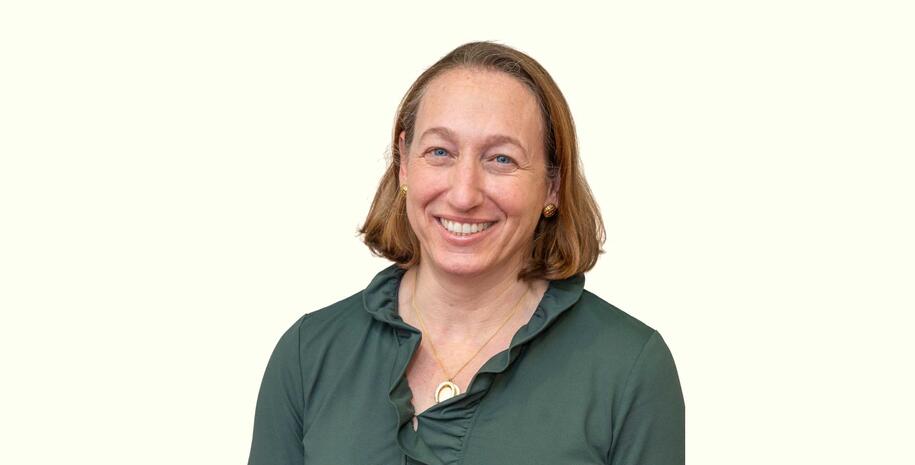
“I have been teaching for twenty years, and this sounds really dramatic, but I would say this has been the absolute high point—teaching this class.”
“I was increasingly concerned about the lack of dialogue taking place around the country, in our own communities, on campuses,” said Catherine Simpson Bueker, Professor of Sociology at Emmanuel College, a Catholic college located in Boston with almost 2,000 undergraduate students. “It came to a head around Israel and Gaza, but that was just the tip of the iceberg.”
Over more than two decades as an educator, Bueker had noticed a growing unwillingness among students to talk with one another about complex issues or to express their opinions on divisive topics. The challenge had become increasingly obvious in the classroom.
“I am really, really against censorship, be it active or formal, whether it's self-censorship or imposed externally. I think it's hugely problematic.”
In Fall 2024, Bueker was invited to participate in an Essential Partners training alongside twenty other faculty members from the Colleges of the Fenway consortium. EP Associates Montressa Washington and Brian Blancke led a two-day workshop designed to equip participants to design and facilitate Reflective Structured Dialogue both on campus and in the classroom.
“I've been teaching for twenty years at the college level. I have always been interested in civics as well as civil discourse. I took over our honors program about a year and a half ago, which gave me the chance to develop a course called Citizenship in the Contemporary US. I have three goals in that class. One is civic knowledge, one is civic skills, and one is civic muscle.”
The first goal, civic knowledge, entails a firm grasp of American government and the architecture of American democracy—the branches of government and their powers, the rights of residents and citizens, and the political debates that have shaped and reshaped American democracy over time.
The second goal, civic skills, entails rigorous research into debates over a contentious issue. Each student was given two index cards. They wrote the top two issues they wanted to debate on the cards. In one class, it was abortion and guns. In the other class, it was abortion and transgender rights.
“Debate is only one important skill to strengthen civil society. The other is listening and understanding where people are coming from, to build that empathy bridge. That's where Essential Partners came in.”
Bueker had the students discuss the same topics they had just debated, this time using the principles of Reflective Structured Dialogue. They began by co-creating agreements to create a space where students could share personal experiences and challenging perspectives. With those agreements, they engaged in dialogues about abortion, guns, and transgender rights.
“It was phenomenal. When we had our last class, I listed all the readings we had done, all the videos we'd watched, and all the assignments we'd completed. I asked the students to think about what was most impactful—not necessarily what they liked the most, but what they thought was most impactful. Over and over, students said it was the Reflective Structured Dialogue.”
Concerned about political and geographic silos, Bueker decided to contact a faculty colleague at the University of Pikeville in Pikeville, Kentucky—one of the most Republican congressional districts in the country. Her Boston-based students began connecting with students from Pikeville, engaging in an adapted form of RSD.
“I had the students tell each other stories using the same list of agreements. So, you're not going to respond. You can ask questions, but only if it's okay with the storyteller and only for clarification purposes, not with the intent of poking holes. Only speaking from the I perspective. Then the listener is retelling the story back to the other student.”
The students read two articles about reparations, comparing the views of Ta-Nehisi Coates and David Frum. They discussed the role of guns and perspectives on abortion. They found surprising points of connection, despite their very different environments. The students came to understand different viewpoints, even if they did not, in the end, change their minds.
“I have been teaching for twenty years, and this sounds really dramatic, but I would say this has been the absolute high point—teaching this class.”